
What Is the Most Common Reason a Furnace Stops Working?
A clogged air filter is one of the most common reasons a furnace stops working, and it is also one of the easiest to prevent. Ada All Seasons Heating And Air sees it every winter in Ada: the filter restricts airflow, the furnace overheats, and a safety switch shuts the burners off to protect it. The house goes cold, and the fix turns out to be a filter and a check that nothing else was damaged. This guide covers the most common furnace failures in Pontotoc County, what a fall tune-up does about them, and what you can do yourself.
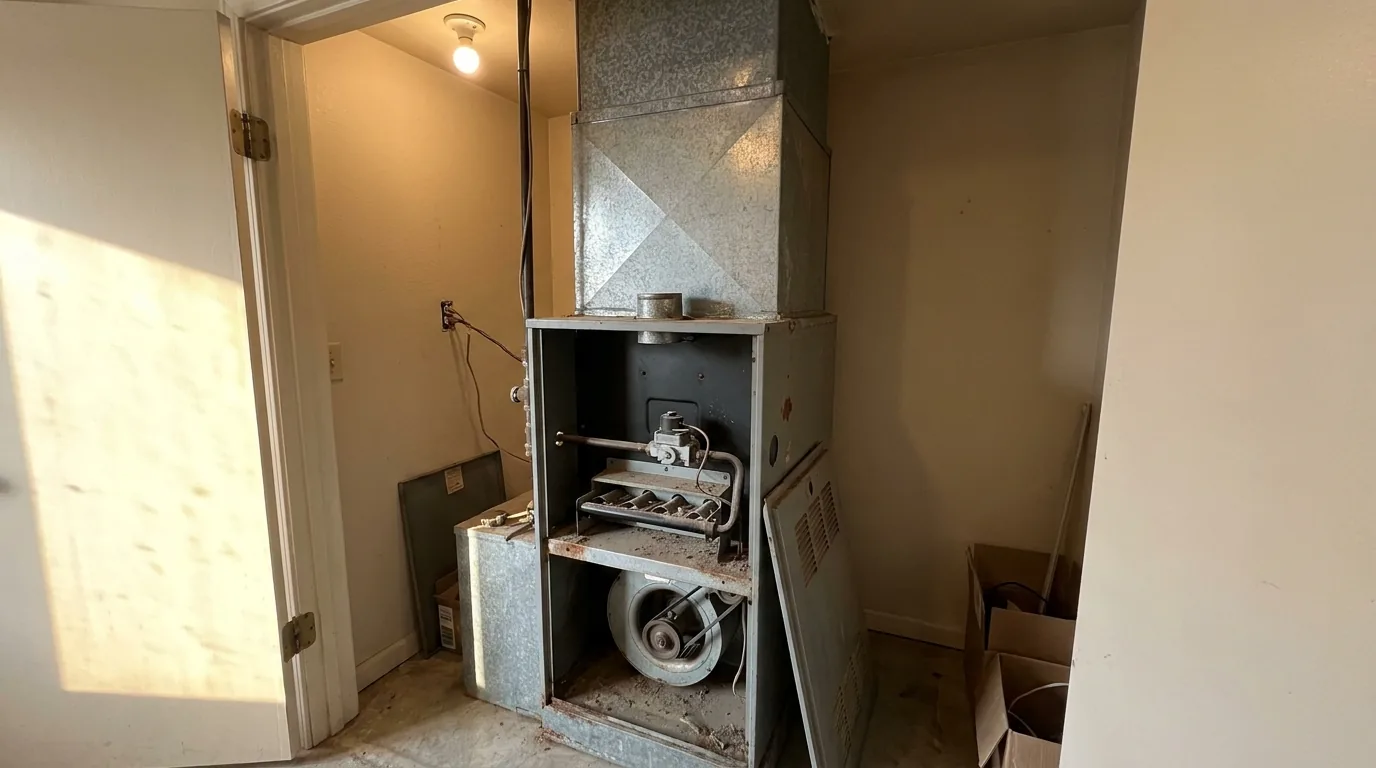
Why do furnaces fail on the first cold night?
A furnace sits idle for most of an Oklahoma summer. The first cold night asks it to go from nothing to full output, and any weakness that built up while it was off shows itself at once. Dust settles on the flame sensor, igniters age, and a filter that was fine in spring may be clogged by fall. Ada All Seasons Heating And Air has found over 23 years in Ada that the first cold snap brings a rush of calls that a fall tune-up would have prevented.
What are the most common furnace failures in Ada?
A clogged filter
A dirty filter limits the air moving across the heat exchanger. The furnace overheats and the high-limit switch shuts the burners down. Changing the filter often solves it, but a furnace that has been overheating repeatedly should be checked.
A dirty flame sensor
The flame sensor confirms that the burners have lit. When it is coated, it cannot see the flame, and the furnace shuts the gas off a few seconds after lighting. The result is a furnace that lights, runs briefly and stops, over and over. Cleaning the sensor is usually enough.
A failed igniter
Most modern furnaces light with a hot surface igniter rather than a pilot light. Igniters wear out, and a cracked one stops the furnace lighting at all.
A thermostat problem
Dead batteries, a wrong setting or a wiring fault can stop the furnace ever getting the call for heat. It is always worth checking before anything else.
A tripped safety switch
Furnaces carry several safety controls. When one trips, it is usually responding to a real problem, such as overheating or a blocked vent, so the cause matters more than the reset.
A worn blower motor
The blower moves heated air through the house. A failing motor can squeal, run weakly or stop, leaving the burners working with nowhere to send the heat.
What does a fall furnace tune-up include?
A fall tune-up from Ada All Seasons Heating And Air is aimed squarely at the failures above. The technician cleans and tests the flame sensor, checks the igniter, inspects the burners, tests the safety switches, checks the blower and its motor, and looks at the filter and the thermostat. The heat exchanger is inspected for cracks, which matters because a cracked heat exchanger can let combustion gases into the air the furnace circulates. The goal is a furnace that starts reliably on the first cold night and runs safely all winter.
The same visit can cover the air conditioner's shutdown for the season if needed, though most Ada homes are best served by a spring visit for cooling and a fall visit for heating. The details are on the HVAC maintenance page.
What can you do yourself before winter?
Ada All Seasons Heating And Air suggests four simple checks for every Ada home before the cold arrives. Change or check the filter. Replace the thermostat batteries if it uses them. Make sure nothing is stored against the furnace or blocking its air supply. And test the carbon monoxide detectors, because a furnace burns fuel and a working detector is the only reliable warning of a problem with combustion gases.
If the furnace will not start, try a simple reset: turn the thermostat down, switch off the furnace's power switch or breaker, wait about a minute, switch it back on and raise the thermostat. If it still will not light, or trips again, call rather than resetting it repeatedly.
When is a furnace repair not enough?
Most furnace failures are repairs, not replacements, and Ada All Seasons Heating And Air treats them that way. A new furnace makes sense when the heat exchanger has cracked, when breakdowns have become a yearly habit, or when repair costs are closing in on the price of a new unit. When that point comes, Ada All Seasons will explain why. See furnace repair in Ada for repairs and furnace replacement in Ada for the rare case where a new furnace is the honest answer.
Ada All Seasons Heating And Air serves Ada and the towns around it, including Latta, Roff and Fittstown. Call (580) 436-6055 before the first cold night rather than after it.
How long should a furnace last?
A gas furnace that has been looked after commonly lasts somewhere around 15 to 20 years, though the range is wide and depends on the equipment, how hard it works and how well it has been maintained. Ada All Seasons Heating And Air does not treat age on its own as a reason to replace a furnace. A 17-year-old furnace that lights reliably, heats evenly and passes a safety inspection is doing its job. What matters is how it is performing, whether the heat exchanger is sound, and what repairs it is starting to need.
The fall tune-up is the natural moment to have that conversation, because it is when the furnace is inspected closely before it has to carry the house through winter.
Why does repair-first matter for a furnace?
A furnace that stops working in January creates pressure to decide quickly, and quick decisions are where upsells happen. Ada All Seasons Heating And Air's promise is honest repairs and no upsells, which means the question asked at every furnace call in Ada is whether it can be repaired, before anything else is discussed.
Does the furnace need to be sized to the house?
Yes, and it matters as much for a furnace as it does for an air conditioner. A common fault in older Ada homes: a furnace that is too large heats the air quickly and shuts off again before that heat has spread evenly, which leaves the room by the thermostat comfortable and the far end of the house cold.
A furnace that is too small runs for long stretches and may never quite catch up on the coldest Pontotoc County nights. Getting the size right depends on the house itself, its insulation, windows and layout, not just its square footage, which is why a straight swap of the old unit is not always the right call when a furnace is finally replaced.
What happens during a furnace repair visit?
The technician starts by asking what the furnace is doing, or not doing, and when it started. From there the checks run in a set order: thermostat and wiring first, since it is the cheapest thing to rule out, then the safety switches, the igniter and flame sensor, and the blower.
Carbon monoxide safety is checked alongside the mechanical fault, not as an afterthought, because a furnace burns fuel and any crack or leak in the venting matters more than the original complaint. You get a plain answer on what failed and what fixing it takes before anything is repaired.
Why does a cracked heat exchanger matter so much?
A furnace's heat exchanger keeps the flame and combustion gases on one side and the air that circulates through your house on the other. A crack lets those two mix, which means the air moving through your vents can carry carbon monoxide, a gas with no smell and no colour.
This is not a fault to simply patch, because the exchanger's job is to keep flame and living space apart and a crack means it no longer does. It is also the clearest example of when replacement really is the honest answer rather than another repair, and working carbon monoxide detectors are the backstop between now and any service visit.
What can you check yourself if heat is uneven room to room?
Start at the vents themselves. A vent that has been closed to quiet a room down, or one blocked by a rug or furniture, is often the whole story, and opening it back up costs nothing.
If every vent is open and the problem persists, look at the return air grille, the large vent the system pulls air back through, and make sure nothing is stacked in front of it. Ductwork running through an unheated attic or crawlspace loses heat along the way in an older Ada home, and that is a fault Ada All Seasons Heating And Air can find but not one a homeowner can fix from the hallway.
More guides like this one are on the Ada All Seasons Heating And Air guides page.